
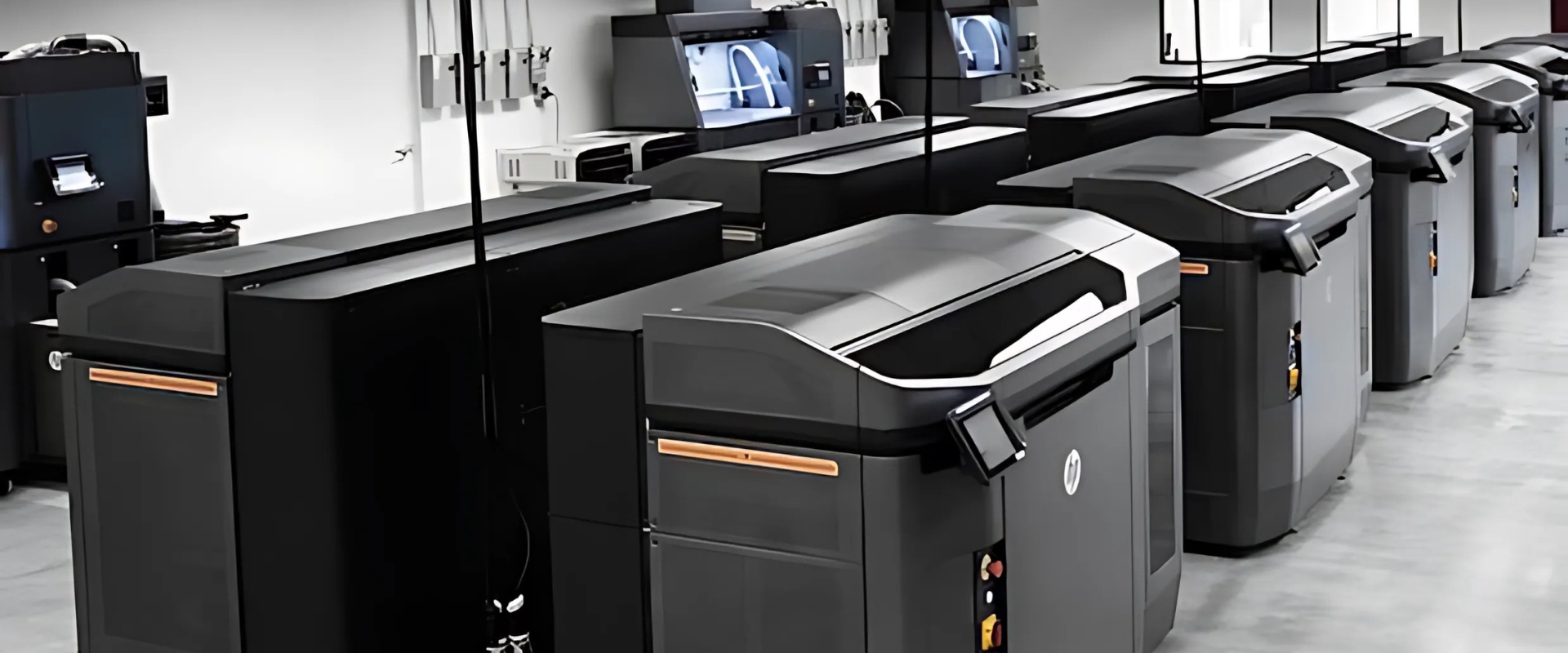
The UAE has rapidly positioned itself as a global hub for innovation, with 3D printing at the core of its manufacturing transformation. The government’s Dubai 3D Printing Strategy has been a major catalyst, aiming to make Dubai a leader in additive manufacturing by integrating 3D printing across construction, healthcare, and industrial sectors.
From building 3D-printed villas to producing customized medical implants, the nation’s commitment to sustainable and futuristic technologies is reshaping how products are imagined and created.
As someone deeply involved in this transformation, I’ve witnessed how demand patterns are rapidly evolving across industries. Businesses are no longer viewing 3D printing as just a design aid, it’s now a strategic manufacturing solution that accelerates production, reduces waste, and supports the UAE’s vision for a greener economy.
The Rise of Functional Prototyping and End-Use Manufacturing
In the early stages, 3D printing in the UAE was primarily used for concept prototypes, models to visualize designs before production. But 2025 marks a major shift. Today, more companies are investing in functional prototypes and end-use components that can be directly installed in machinery, vehicles, and consumer products.
This evolution comes from a growing demand for reliability, material strength, and production scalability. Industries such as aerospace, automotive, and healthcare are leading the charge, seeking durable parts that meet high performance standards.
At Orbit3D, we’ve seen a 200% increase in clients asking for industrial-grade 3D printed parts rather than just concept models. This reflects how businesses now trust additive manufacturing not only for creativity but also for production-level consistency.
The Technology Leading the Demand in 2025 – SLS (Selective Laser Sintering)
Among all the technologies driving the 3D printing wave in 2025, Selective Laser Sintering (SLS) stands at the forefront. SLS uses a high-powered laser to fuse powdered materials, typically nylon or composites—into strong, functional parts with remarkable precision.
The reasons behind its dominance are clear:
- Exceptional durability and mechanical strength, ideal for demanding industrial applications.
- No need for support structures, allowing for complex geometries and lightweight designs.
- Versatility across industries, from aerospace and automotive to healthcare and architecture.
These advantages make SLS the preferred choice for companies looking to bridge the gap between prototyping and full-scale production.
Our SLS machines at Orbit3D have been running at near full capacity this year, a clear reflection of the shift toward production-grade printing. This surge underscores the growing confidence in SLS as the go-to technology for performance-driven manufacturing in the UAE.
Emerging Competitors – FDM and SLA Gaining Niche Popularity
While SLS clearly leads the industrial segment, other technologies like FDM (Fused Deposition Modeling) and SLA (Stereolithography) continue to play crucial roles in specific applications.
FDM remains the go-to choice for educational institutions, startups, and small businesses seeking affordable and quick prototyping solutions. Its cost-effectiveness and ease of use make it ideal for design iterations and conceptual testing.
On the other hand, SLA has carved its niche in sectors that demand exceptional surface finish and detail accuracy, such as jewelry, dental, and creative design. The smooth texture and precision of SLA prints make them highly sought after for aesthetic and visual models.
Each of these technologies contributes to the UAE’s diverse 3D printing ecosystem. Yet, when it comes to scalability, durability, and industrial-grade applications, SLS continues to stand as the backbone of production-level additive manufacturing in 2025.
The Future – Beyond Printing, Toward Full-Scale Manufacturing
The UAE’s 3D printing journey is only beginning. As industries evolve, the focus is shifting from prototyping toward digital manufacturing ecosystems that integrate automation, AI-based design optimization, and sustainable materials.
At Orbit3D, our vision goes beyond delivering printed parts — we aim to build a future where custom manufacturing becomes faster, smarter, and more sustainable. We are investing in next-generation materials, process automation, and hybrid manufacturing systems that merge 3D printing with traditional production to achieve unmatched precision and efficiency.
Our goal is simple: to make 3D printing not just an innovation tool, but a mainstream manufacturing solution for the UAE and beyond.
Closing Thoughts
As 2025 unfolds, one thing is clear, Selective Laser Sintering (SLS) stands at the center of the UAE’s 3D printing revolution. Its ability to deliver strong, functional, and production-ready parts is transforming how businesses approach design and manufacturing.
At Orbit3D, we believe the future of manufacturing in the UAE isn’t waiting to arrive, we’re printing it, layer by layer. With every project, we continue to push boundaries, redefine possibilities, and contribute to the nation’s vision of technological excellence.