
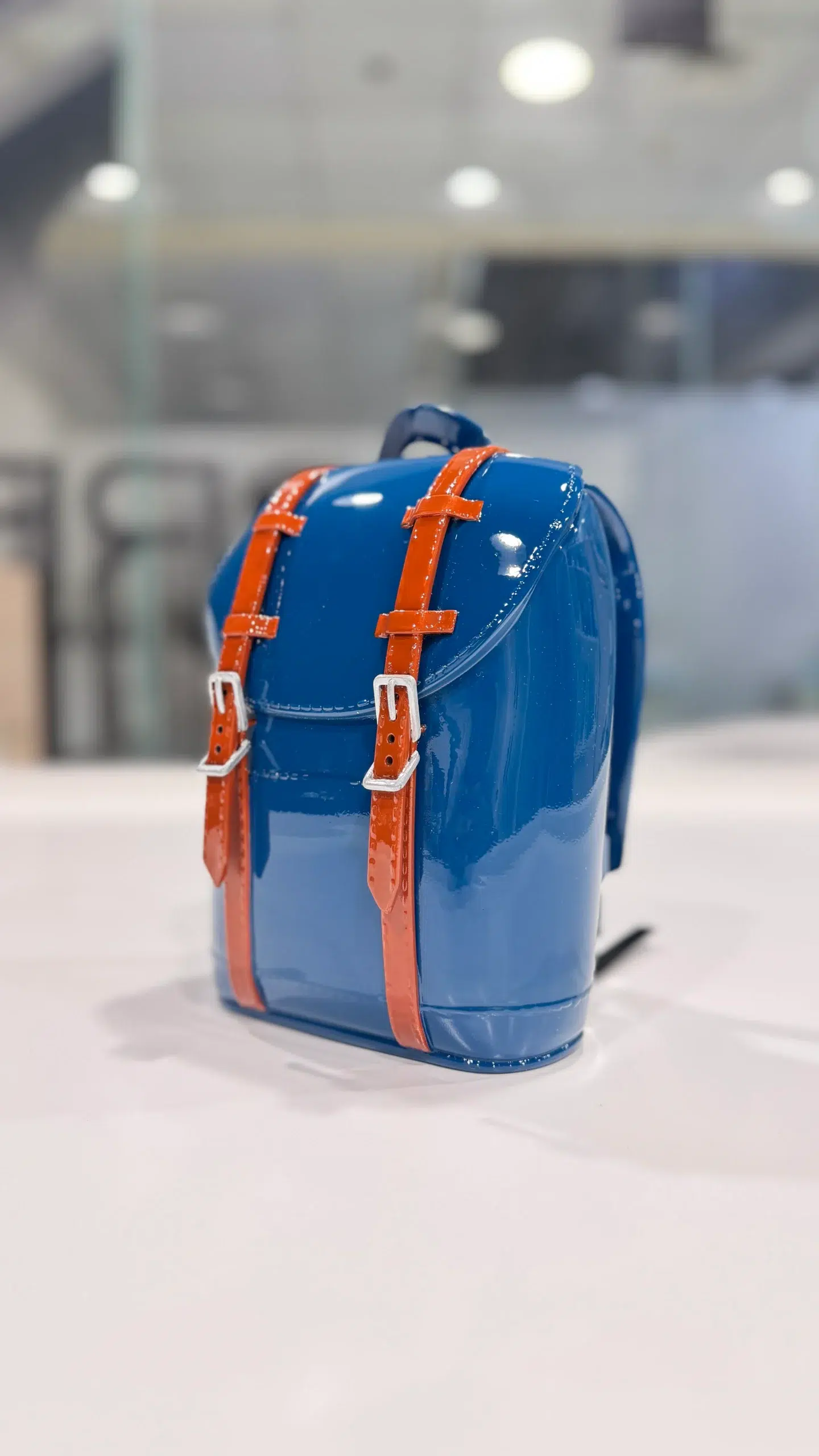
TPU 3D Printing. Rubber-like parts, printed to shape.
Thermoplastic Polyurethane — the flexible filament for elasticity-dependent applications: gaskets, grips, protective gear and wearables that bend, compress and bounce back.
Flexibility Is a Feature, Not a Compromise
TPU behaves like engineered rubber: it stretches, compresses and returns to shape, absorbs impact and vibration, and grips where hard plastics slide. For gaskets, seals, bumpers, phone cases and ergonomic contact surfaces, no rigid material substitutes.
The live guide calls it "challenging to print" — true on desktop machines. Flexible filament demands slower speeds and tuned extrusion, which is exactly what a professionally profiled farm delivers as routine.
| Type | Thermoplastic Polyurethane (flexible elastomer) |
|---|---|
| Technology | FDM — TPU-tuned profiles, slower speeds |
| Behaviour | Elastic stretch, compression recovery, impact absorption |
| Hardness | Shore-A grades matched per application |
| Grip | High-friction surfaces where plastics slip |
| Durability | Excellent abrasion and tear resistance |
Very fine detail and thin flexible walls interact — we'll advise on minimum feature sizes per design.
Where TPU Wins — and Where It Doesn't
Choose TPU For
- Gaskets, seals and vibration dampers
- Phone cases and device protection
- Grips, handles and ergonomic contact surfaces
- Protective gear and wearable components
- Flexible hinges and living joints
Look Elsewhere When
- Rigid structural duty — every other material beats it
- Sharp dimensional precision — flexibility fights tolerance
- Fine miniature detail — flexible resin resolves finer
- Cheap quick prototypes — PLA costs and prints faster
What We Print in TPU
Protective Gear
Bumpers, guards and cases that absorb the hit.
Device Cases
Custom-fit phone and equipment protection.
Gaskets & Seals
Compression seals shaped exactly to your assembly.
Grips & Handles
Ergonomic contact surfaces with real friction.
Vibration Dampers
Mounts and feet that quiet machinery.
Wearables
Straps and skin-contact components that flex with you.
Printed On · Compared With · Ordered Through
TPU — Common Questions
How flexible is printed TPU really?
Genuinely rubber-like — parts stretch, compress and recover. Stiffness is tuned via Shore hardness grade and wall/infill design, from squishy grips to firm-but-forgiving brackets.
Why do some shops refuse TPU jobs?
Flexible filament jams unturned printers. It requires slower speeds and calibrated extrusion — routine on our farm profiles, painful on desktop defaults.
Can TPU parts be load-bearing?
They excel under compression and impact, not rigid structural load — for stiff strength choose PA12 or carbon-filled grades, honestly.
Does TPU survive UAE heat?
Well — TPU tolerates heat better than PLA and stays flexible across temperature swings, making it solid for in-car grips and outdoor seals in shade.
What does TPU printing cost?
Slightly above standard filaments due to slower print speeds — exact per-part pricing via file upload.
Order Your Parts in
TPU Today.
Upload your file and select TPU — same-day quote with honest advice if another material fits better.