
3D Printing Resins. Liquid until the laser says otherwise.
UV-curable photopolymers for SLA printing — a family spanning standard, tough, flexible, transparent and high-temperature grades, all sharing the same superpower: near-polished surfaces with extraordinary detail.
One Chemistry, Five Personalities
All resins photopolymerize — a UV laser cures liquid into solid, layer by layer — but the formulations diverge: standard resins maximise detail and finish, tough grades approach ABS behaviour, flexible resins bend, clear resins pass light, and high-temp grades survive heat other polymers can't.
The shared trade: finer detail and better surfaces than any filament, at higher material cost and with post-processing (wash and UV cure) built into every job.
| Type | UV-curable photopolymers (SLA) |
|---|---|
| Grades | Standard · tough (ABS-like) · flexible · clear · high-temp |
| Layer heights | Down to 0.05 mm for micro-detail work |
| Surface | Near-polished with minimal layer lines |
| Post-processing | Alcohol wash + UV cure included in every job |
| Cost class | Resin AED 184–367 per liter — above filaments, worth it for detail |
Resin parts are more brittle than FDM equivalents — we scope duty per part and say so when a filament serves better.
Where resin Wins — and Where It Doesn't
Choose resin For
- Miniatures, busts and fine-featured models
- Dental and medical models, surgical guides and aligner work
- Jewellery prototypes and casting patterns with clean edges
- Master patterns for silicone molds
- Presentation pieces where surface quality sells the part
Look Elsewhere When
- Rough functional duty — Nylon PA12 is far tougher
- Big parts on a budget — FDM in PLA costs a fraction
- Prolonged outdoor UV — resins continue curing and grow brittle
- Large build volumes — resin printers build smaller than the FDM farm
What We Print in Resin
Jewellery Patterns
Casting-ready masters with loupe-grade detail.
Dental & Medical Models
Surgical guides, aligner models and anatomy.
Presentation Models
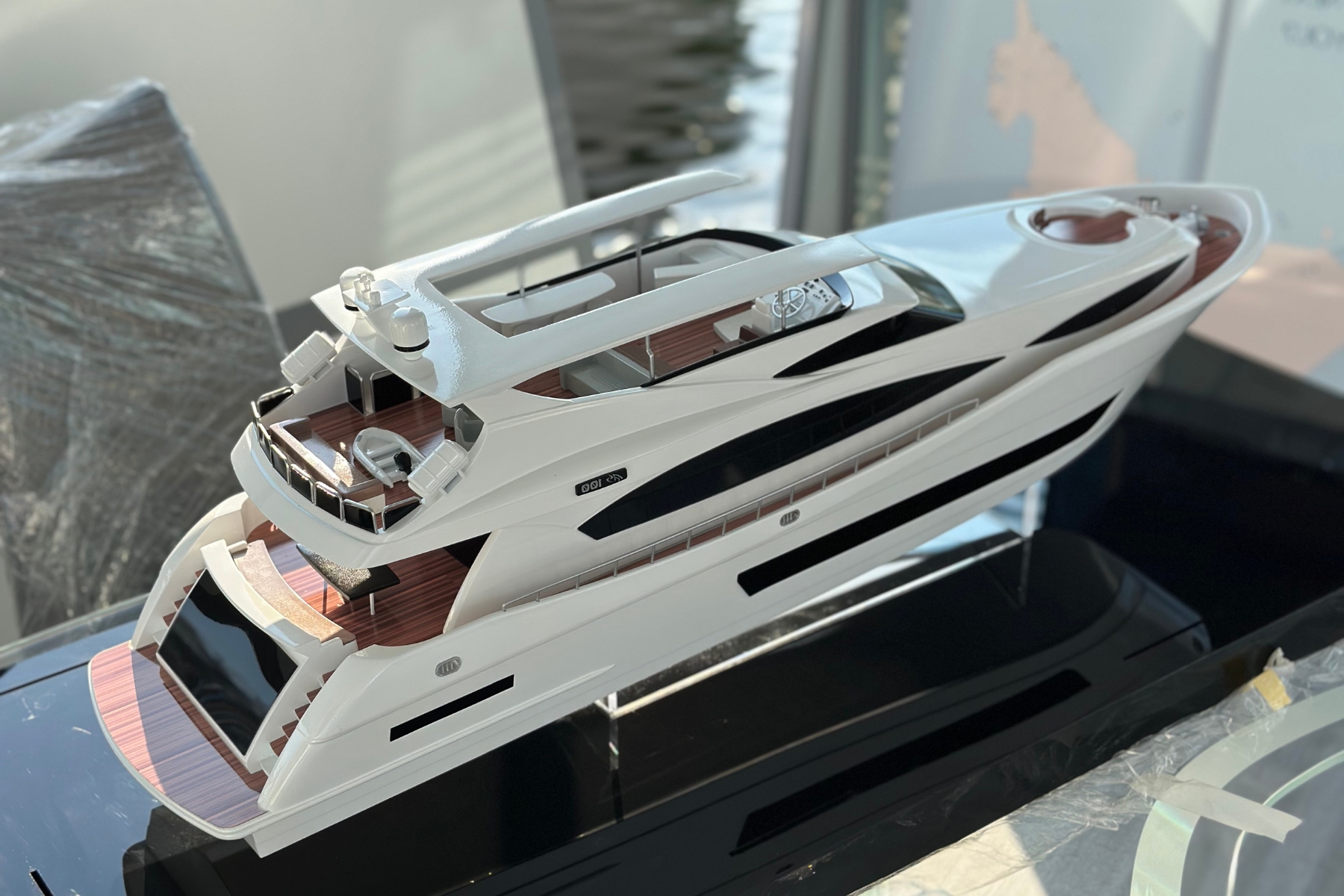
Boat-show yacht hulls — glass-smooth SLA at work.
Miniatures & Figures
Character work with sub-millimetre features.
Mold Masters
Patterns for silicone molding workflows.
Clear & Optical Parts
Transparent covers, lenses and light guides.
Printed On · Compared With · Ordered Through
resin — Common Questions
Which resin grade should I choose?
Standard for models and detail, tough for handled prototypes, flexible for gaskets and grips, clear for optical parts, high-temp for heat-exposed components. Describe the duty and we'll match the grade.
Why do resin parts cost more than FDM?
Material runs AED 184–367 per liter versus AED 73–184 per kg for filament, and every part is washed and UV-cured. You're buying surface quality and detail no filament reaches.
Are resin parts strong?
Standard resins are more brittle than FDM parts; tough grades close the gap considerably. For genuinely hard service, we'll recommend nylon honestly.
Is resin safe for skin-contact or dental use?
Application-specific grades exist and we scope case by case — models and guides are routine; anything regulated gets an honest conversation about certified routes.
How fine is the detail, really?
0.05 mm layers resolve text, texture and filigree that survives a jeweller's loupe — see the jewellery page for that standard.
Order Your Parts in
resin Today.
Upload your file and select resin — same-day quote with honest advice if another material fits better.